Quick answer
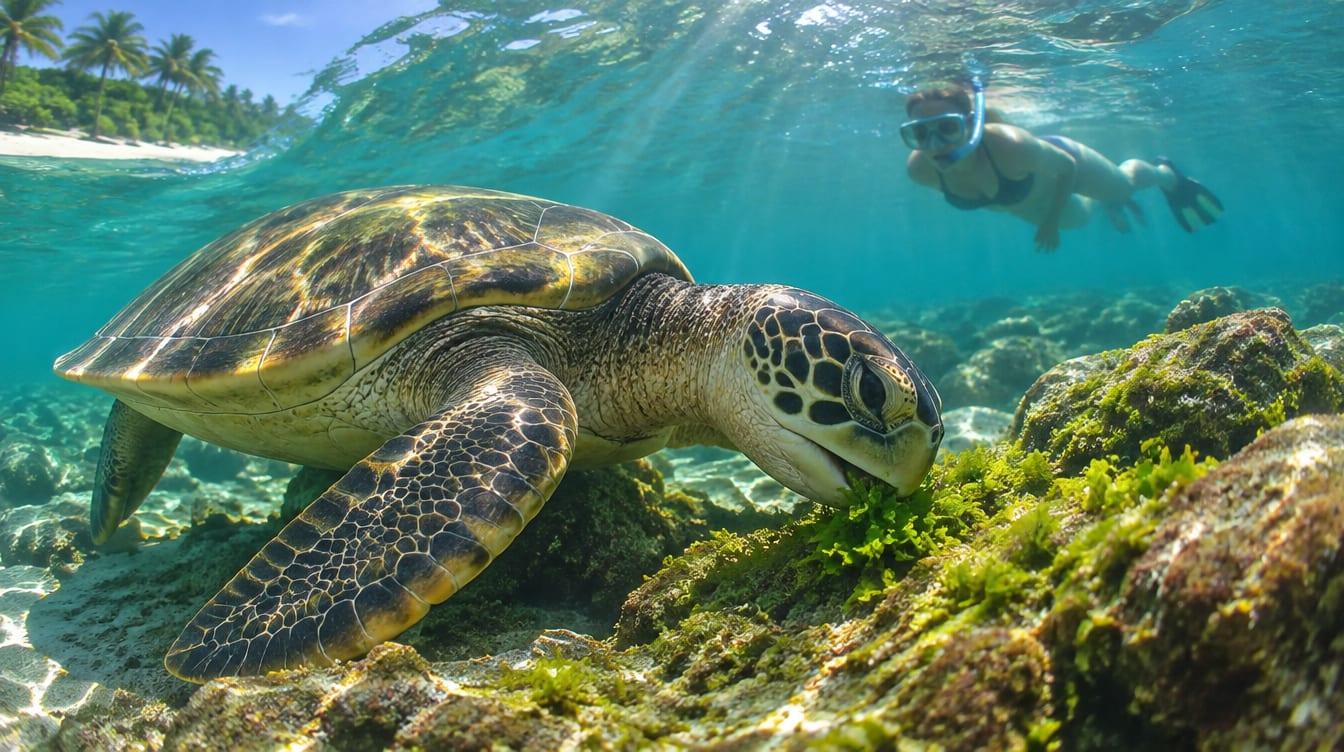
At Turtle Beach in Hikkaduwa, wild green sea turtles feed on seaweed in the shallows almost every day, often a few metres from shore. Go between November and April, in the early morning on a calm day, for the clearest water. Snorkel the nearby coral reef of Hikkaduwa National Park too, and never touch or feed the turtles.
What is Turtle Beach?
Turtle Beach is a stretch of Hikkaduwa's shoreline where wild green sea turtles come in to graze on the seaweed growing on the rocks. Because they feed so close to shore, it's one of the easiest places in Sri Lanka to see turtles in the wild. You can often spot them while standing knee-deep, and even more easily with a mask and snorkel.
It's a short walk from the main surf breaks and from our shop on Galle Road.
The Hikkaduwa coral reef
Just off the main beach is the coral reef of Hikkaduwa National Park, one of Sri Lanka's few marine national parks. The reef was badly hit by coral bleaching in 1998 and by the 2004 tsunami, but parts are recovering. You can still see:
- Reef fish: parrotfish, angelfish, butterflyfish, surgeonfish and wrasse
- Moray eels hiding in the rocks
- Hard and soft corals, plus sea urchins and sea cucumbers
- Turtles passing over the reef
Glass-bottom boats run over the reef from the main beach if you don't want to get wet. Snorkeling gets you much closer.
Best time to snorkel in Hikkaduwa
| Factor | Best choice |
|---|---|
| Season | November – April (dry season, calmer sea) |
| Time of day | Early morning, before the wind and the crowds |
| Conditions | Small swell, little wind, mid to high tide |
| Avoid | May – October monsoon swell, and murky water after heavy rain |
How to see the turtles (the right way)
The turtles at Hikkaduwa are wild animals and they're used to people, sometimes too used to us. Please follow these simple rules:
- Don't feed them. Many vendors sell seaweed to hand-feed turtles. It changes their natural behaviour and diet, makes them aggressive toward swimmers, and can spread disease.
- Don't touch or chase them. Give them at least 2–3 metres of space and let them come to you.
- Don't stand on rocks or coral. You'll damage the reef and risk cutting your feet.
- Use reef-safe sunscreen, or better, wear a rash vest.
- No flash photography up close.
Snorkeling options
- DIY from the beach: rent a mask, snorkel and fins and swim out in calm conditions. It's only suitable for confident swimmers who understand currents.
- Guided snorkeling: a local guide takes you to the best spots, keeps an eye on currents and boats, and points out wildlife you'd miss.
- Boat snorkeling trip: go further out to quieter rocks and reef patches when the sea is calm.
Blue Surf runs guided snorkeling and boat trips in Hikkaduwa with all gear included, and you can combine them with a surf lesson.
How much does snorkeling cost in Hikkaduwa?
Gear rental for a few hours is inexpensive. Guided snorkeling and boat trips cost more and depend on group size and duration. Message us for today's prices.
Want to see baby turtles too?
Several turtle hatcheries along the coast between Hikkaduwa and Kosgoda run conservation programmes and release hatchlings. Choose one that focuses on releasing hatchlings quickly rather than keeping turtles in tanks for show. It's an easy add-on to a day trip from Hikkaduwa.
Plan your day
Pair an early snorkel at Turtle Beach with a surf lesson, lunch on the beach and sunset at Narigama. For more ideas, see our list of the best things to do in Hikkaduwa.
Frequently asked questions
No. Feeding seaweed to turtles changes their natural behaviour and diet and can make them aggressive or sick. Watch them from a respectful distance instead.
From November to April, early in the morning on a calm day. During the May to October monsoon the sea is often rough and visibility is poor.
Parts of the reef in Hikkaduwa National Park were damaged by bleaching in 1998 and the 2004 tsunami, but sections are recovering and still support corals, reef fish, eels and turtles.