Quick answer
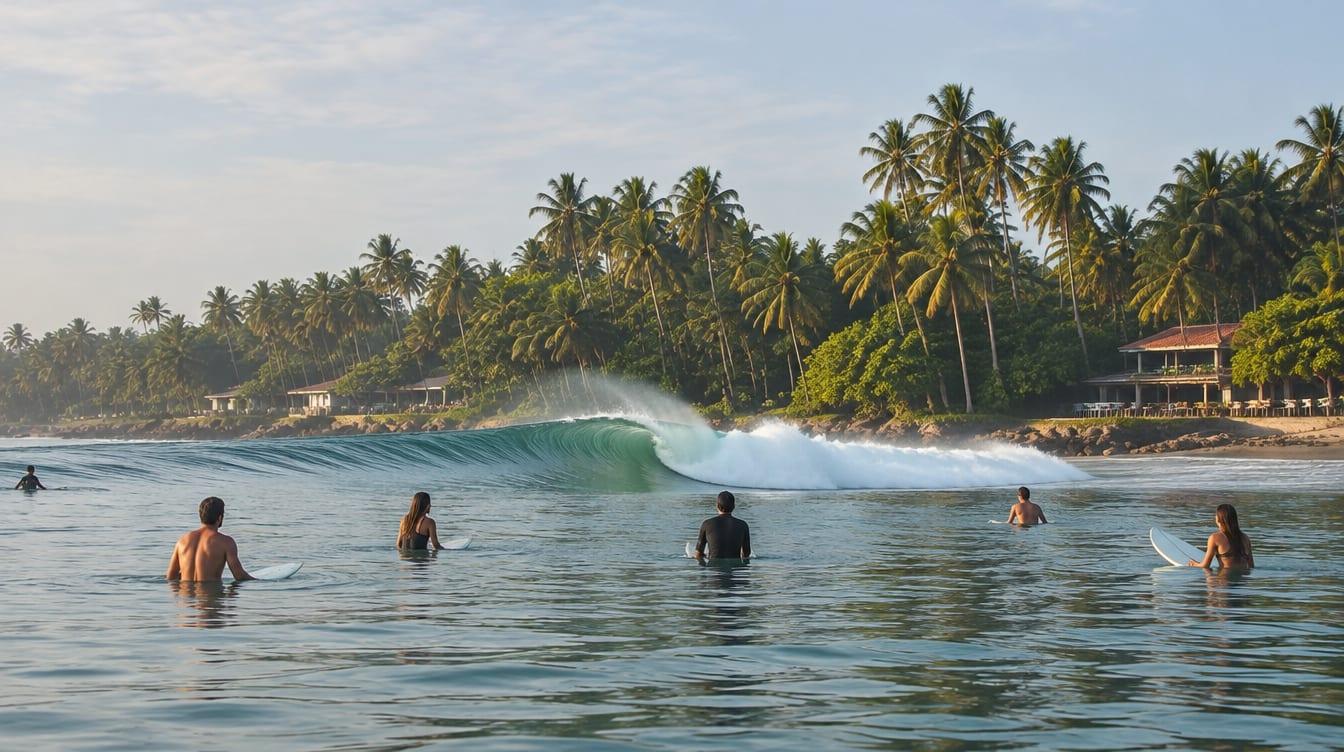
Hikkaduwa’s main surf spots are Main Reef, a peaky A-frame reef with lefts and rights for intermediates, the gentler North Jetty area for improvers, and Benny’s, a heavier reef for experienced surfers, plus sandier beach-break sections for beginners. The season runs from November to April, and early mornings are usually cleanest.
Hikkaduwa at a glance
Hikkaduwa is a compact surf town. Several breaks sit along a few kilometres of Galle Road, so you can check two or three spots before breakfast. Most waves break over reef, which gives clean, predictable shapes but also means you need to know where the shallow parts are.
Conditions change daily with swell, tide and wind. If you're not sure where to go, ask us at the shop. We'll tell you where it's working for your level that morning.
The main spots
| Spot | Wave type | Level | Notes |
|---|---|---|---|
| Main Reef | A-frame reef, lefts & rights | Intermediate + | Hikkaduwa's best-known wave, busiest |
| North Jetty | Reef / sandy bottom, softer | Improver – intermediate | Mellower option on smaller days |
| Benny's | Powerful reef break | Advanced | Faster, hollower, shallow at low tide |
| Beach breaks / inside sections | Soft white water | Beginner | Where lessons usually happen |
Main Reef
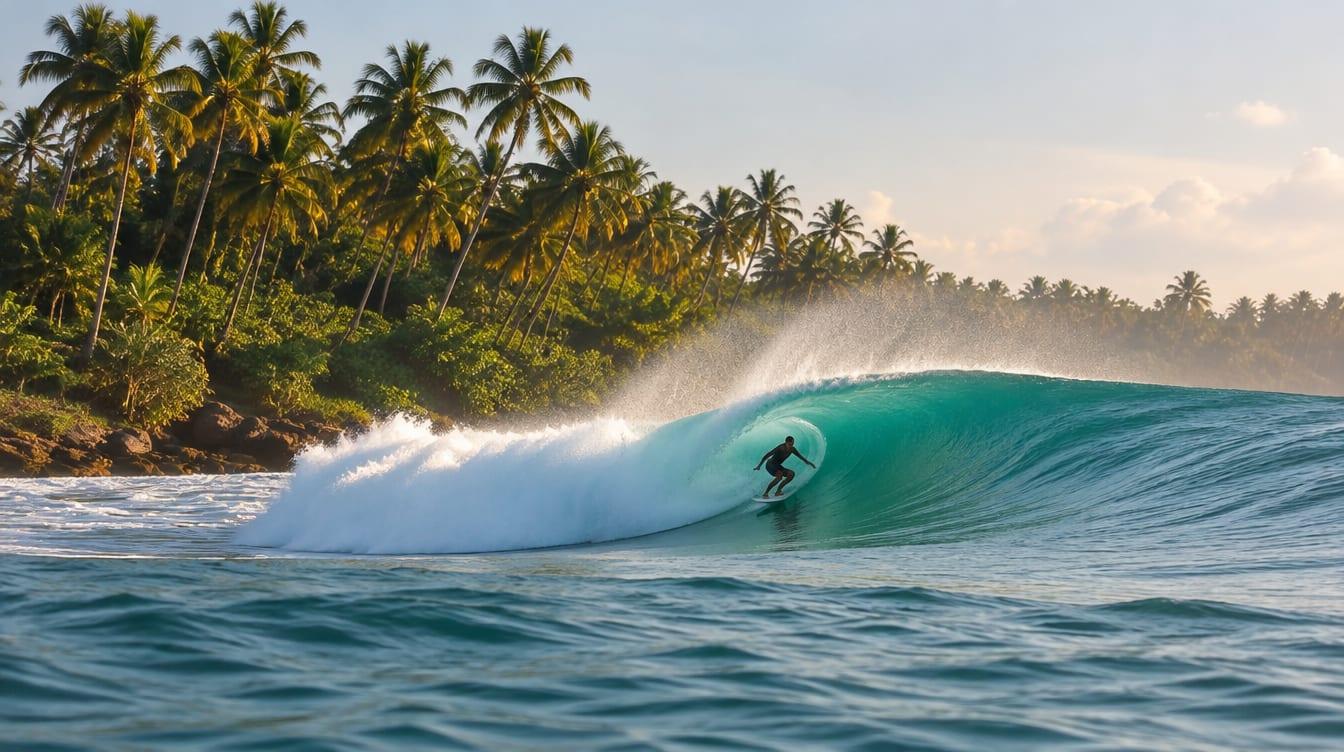
The heart of Hikkaduwa surfing. Main Reef is a peaky A-frame that peels both left and right, so it works for regular and goofy footers. It handles a range of swell sizes and can be very fun on a good day, but it gets crowded in peak season. Go early, wait your turn, and keep off the inside when sets roll through.
North Jetty
A softer, more forgiving wave on the right days. It's a good next step once you can paddle into green waves on your own. It's often less intense than Main Reef, which makes it a favourite for longboards and mid-lengths.
Benny's
A faster, heavier reef for experienced surfers only. It can be hollow, and the reef is shallow on lower tides. If you're not sure, it's not for you yet.
Beginner sections
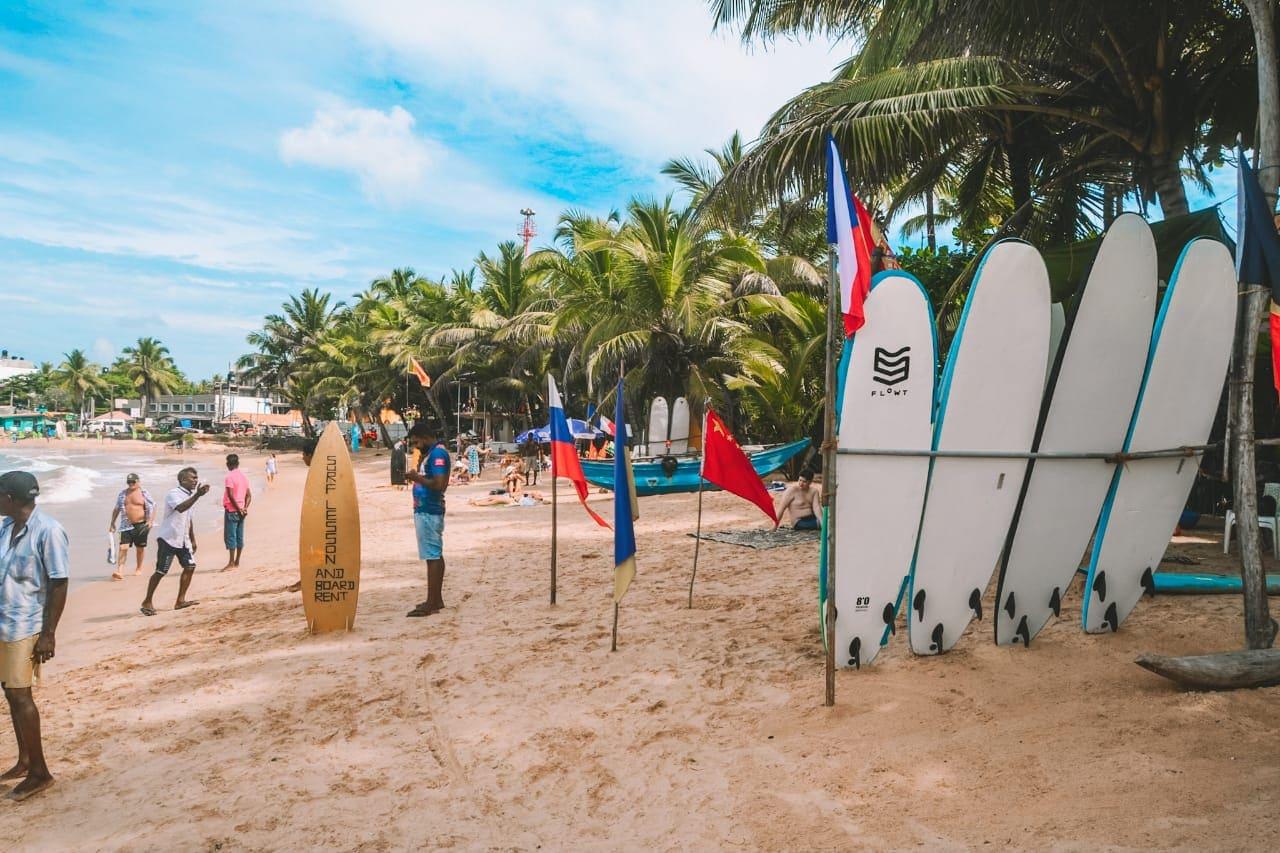
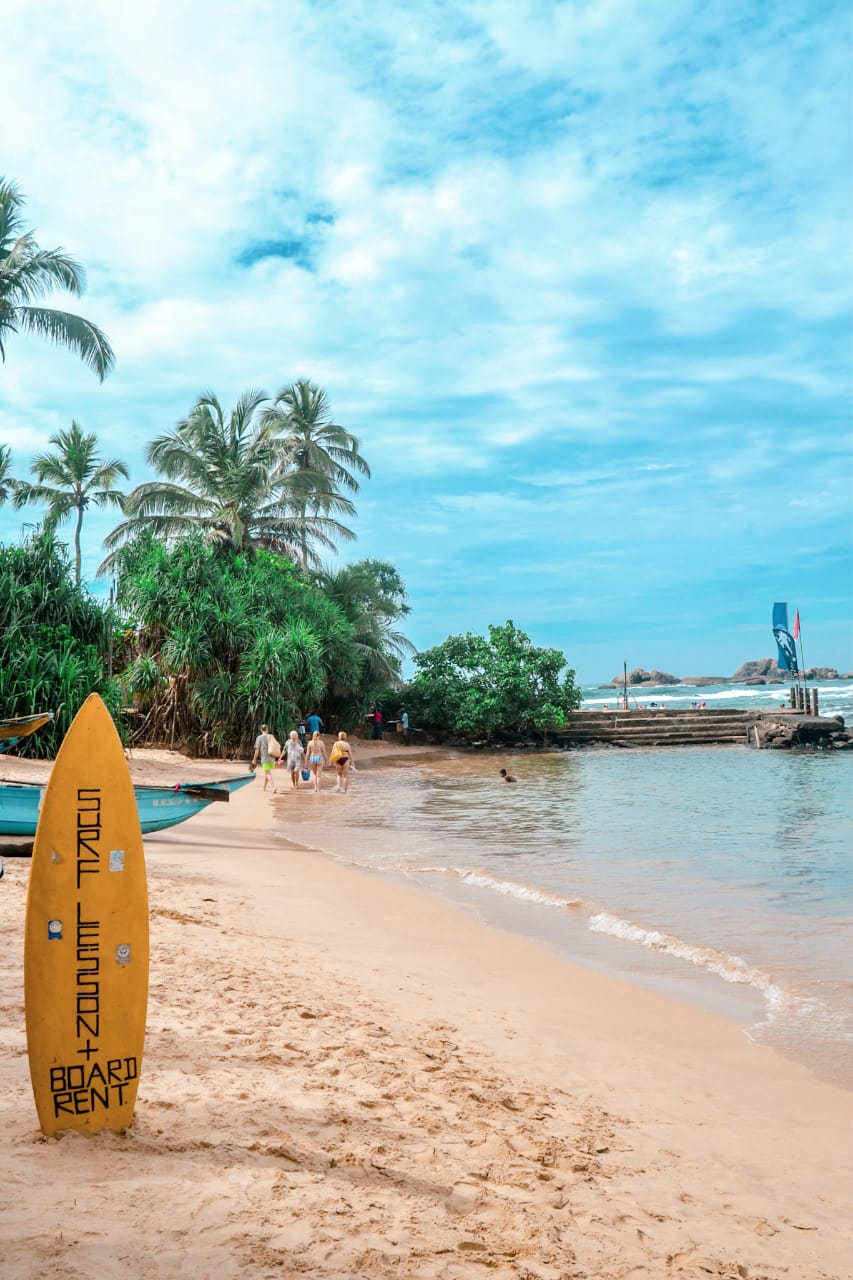
On most days there's a safe stretch of white water and small, gentle waves inside the reefs. That's where our beginner surf lessons take place. Your instructor will choose the spot depending on tide and swell.
Best tides and conditions
- Swell: south-west swells in the November–April season.
- Wind: light or offshore winds in the morning. Expect onshore sea breezes from late morning.
- Tide: mid tides are usually the safest and most forgiving over the reef. Shallow spots are best avoided at dead low tide.
Line-up etiquette (and why it matters here)
Hikkaduwa's reefs are popular with locals and visitors alike. Keep it friendly:
- Don't drop in on someone already riding the wave.
- Paddle wide around the peak, not through it.
- Hold on to your board.
- Respect local surfers and say hello.
Gear tips
- Reef booties for shallow spots and low tide.
- A rash vest and reef-safe sunscreen.
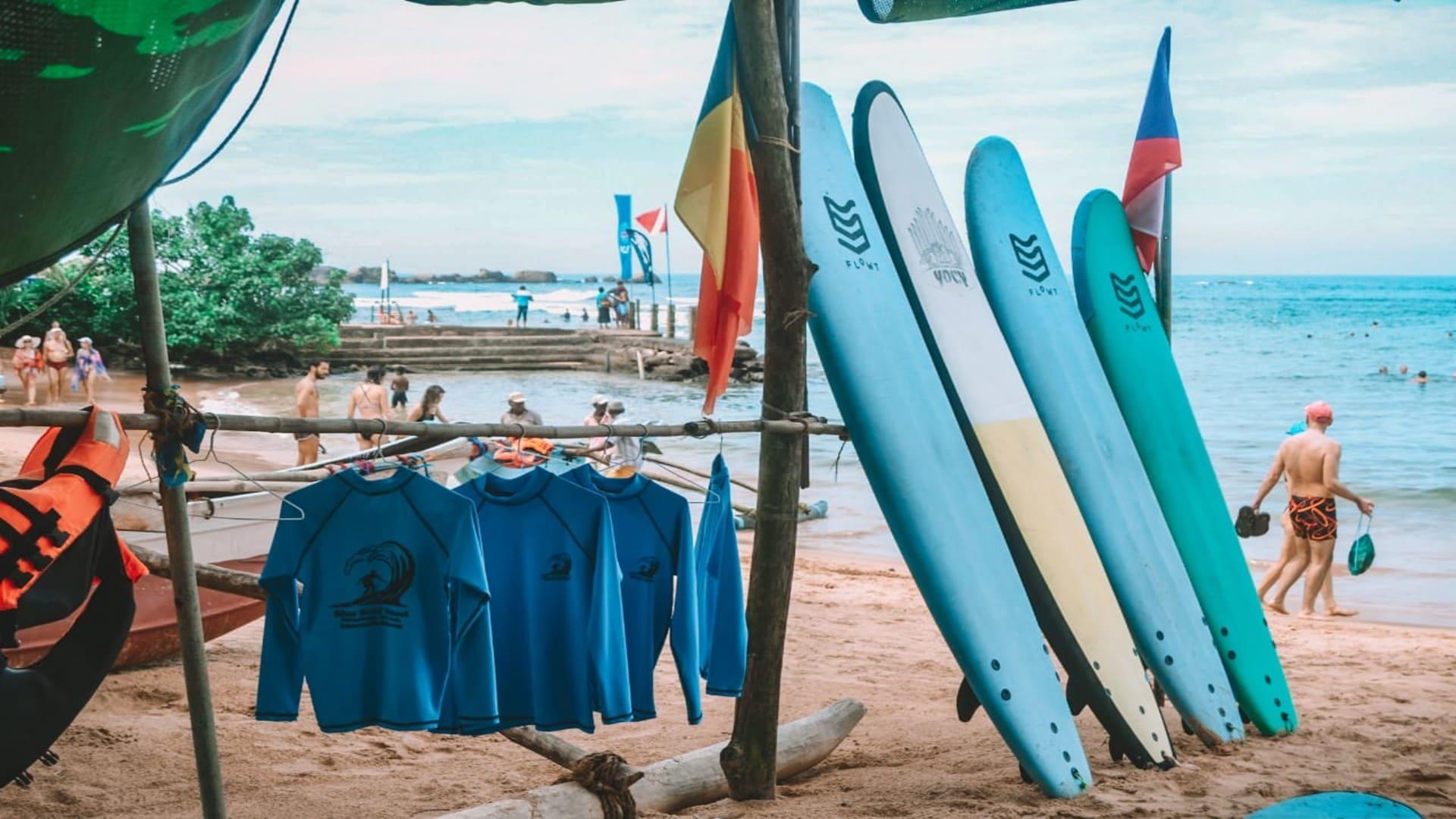
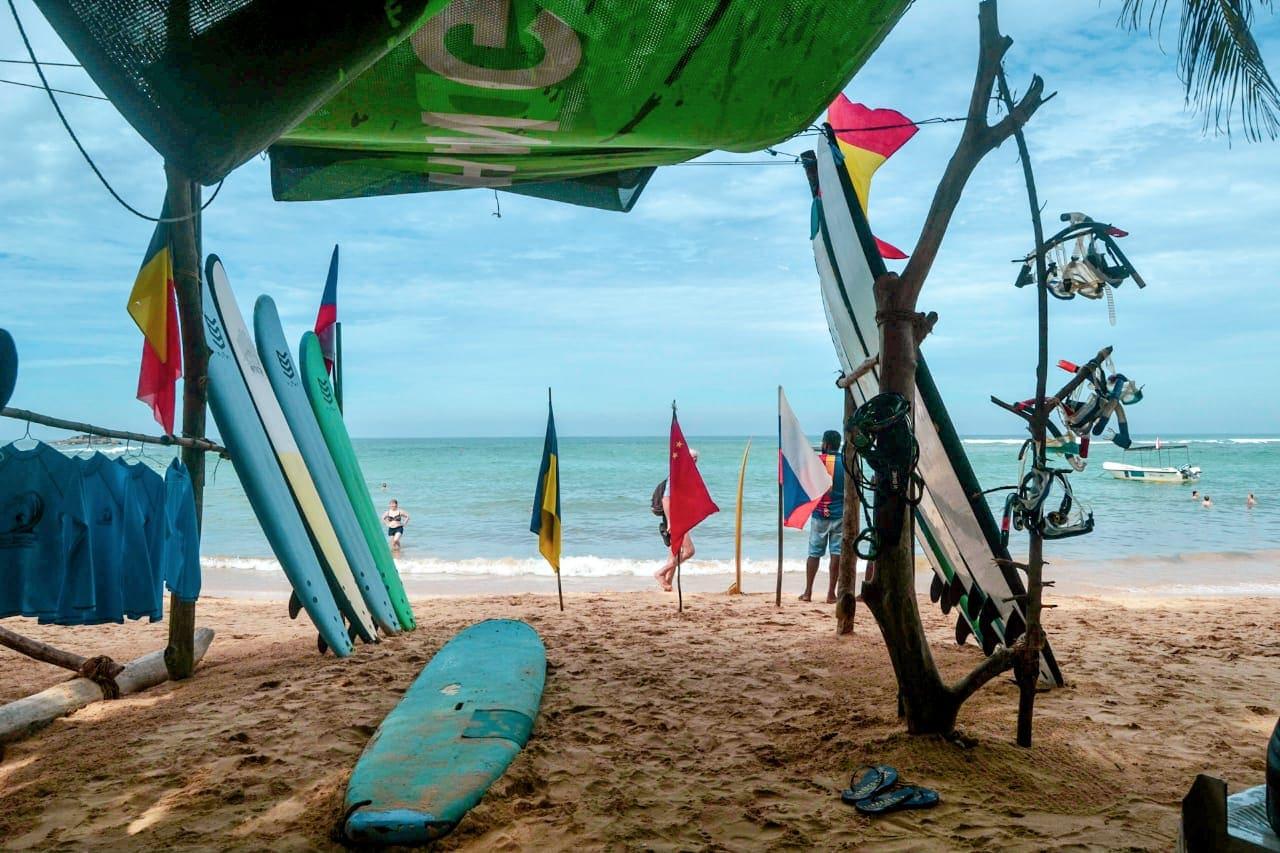
- The right board makes a big difference. Rent one from us, or ask for advice on what suits the day.
Surf the best spots with a local
Want someone to show you around? Book a guided session or a lesson and we'll take you to the right wave for your level. Plan your dates with our best time to surf in Sri Lanka guide.
Frequently asked questions
Most of Hikkaduwa’s quality waves break over reef. There are softer inside sections where beginner lessons take place.
They are recommended at shallow reef breaks, especially at low tide, but not essential for beginner lessons on the inside sections.